
























As of early 2026, in Minnesota, U.S. Immigration and Customs Enforcement (ICE) carried out a massive immigration enforcement operation, with a rough estimate of 3,000 federal agents, known as Operation Metro Surge. With many saying the administration is mostly targeting undocumented immigrants rather than focusing on individuals with criminal records, which they argue is to protect citizens.
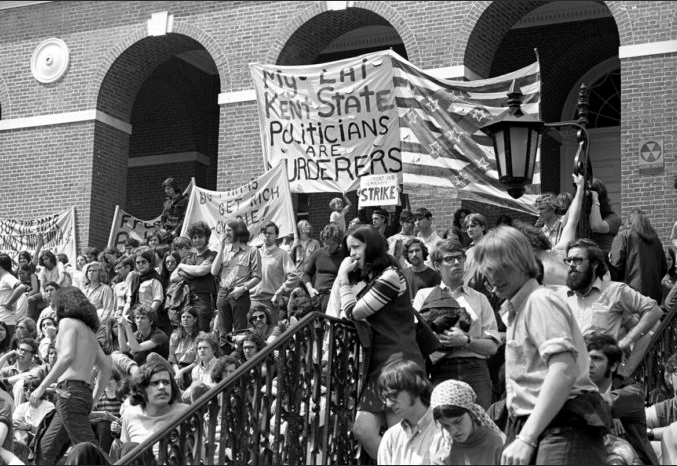
Their actions sparked backlash from local activists and community members, leading to more protests against ICE. Some demonstrations escalated, with federal agents becoming aggressive or violent against protesters. During these confrontations, Renée Nicole Good and Alex Pretti were killed.
Their deaths prompted more individuals to take action, including the recent protest of Cities Church in St. Paul, sparking debate over the legality and appropriateness of protesting ICE at a “place of worship.”
Church Protest
In an interview with former CNN anchor Don Lemon, civil rights activist, lawyer, and former member of the Minnesota NAACP, Mekima Levy Armstrong explained that a group of people like herself [activists] do the “pull up method” as she calls it. “We go somewhere that is a key location […], and then we disrupt business as usual.” The tactic is intentionally confrontational, leaving some critics to view it as abrasive.
On January 18, 2026, Lemon accompanied the protesters with his producer as a journalist, making it clear to the people interviewed that he was “not with the group” to Cities Church in St. Paul, a Southern Baptist congregation whose leadership includes Pastor David Easterwood.
Easterwood also holds the position of acting field office director for the U.S. Immigration & Customs Enforcement removal operations at the White House, being one of the top officers at the Department of Homeland Security, and is in charge of the ongoing immigration dragnet in Minnesota. The protesters argued that those two positions: ICE agent and the pastor, are contradictory, insisting that you cannot claim to serve God while simultaneously rounding up children, documented immigrants, and engaging in violence against protesters.
Inside the church, the protesters disrupted the church service, chanting, “ Ice out, justice for Renee Good,” and arguing with members of the congregation.
Easterwood wasn’t there, but Lead Pastor Jonathan Parnel explained in an interview with Lemon, “We’re here to worship Jesus because that’s the hope of these cities.” On the contrary, Armstrong connected the protest to Easterwood and the murder of Renee Good, explaining, “And that’s why we’re here demanding justice for Renee Good and letting them know that this will not stand. They cannot pretend to be a house of God while harboring someone who is directing ICE agents to wreak havoc upon our community.”
The protest lasted a total of 15 minutes, then the activists left due to the members’ complaints. Once the protesters gathered in the parking lot, Armstrong started connecting the protest to her beliefs, “Which side are they on? The side of the Lord, truth, righteousness, or justice? Or the side that pretends to be on the Lord’s, while helping harbor and to perpetuate evil in our community.”
On January 19, 2026, the North American Mission Board put out a statement accusing the protesters of violating the sanctuary and obstructing Christian worship, stating, “What occurred was not a protest; it was lawless harassment.”
They called out to the Department of Justice (DOJ) to investigate if any federal laws were violated, hoping that calling on “state leaders in Minnesota to ensure that order is restored and that egregious events of this nature are not permitted to happen again.” To which Attorney General Pam Bondi replied in a tweet that the “attackers” were “being met with the full force of federal law.”
Arrest Warrants
“If there is no law to fit, they will try to fit or retrofit something or go around a judge and just do it themselves,” – Don Lemon.
On January 20, 2026, one of the 13 U.S. appeals courts, the Eighth Circuit, rejected the DOJ’s filing. Originally, they were seeking action against eight people involved in the protest, including Armstrong, Lemon, his producer, and five other protesters, concerning their actions at Cities Church.
The DOJ issued arrest warrants on grounds of violating the Freedom of Federal Access to Clinical Entrances Act (18 U.S.C. § 248), which prohibits the use of force, threats, or physical obstruction to interfere with a person’s exercising their religious freedom at a place of worship.
Following the DOJ’s request, Federal Magistrate Judge Douglas Mikos Chambers declined arrest warrants for five defendants, including Lemon, citing a lack of evidence. However, he approved arrest warrants for Armstrong and two other protesters: Chauntyl Louisa Allen and William Kelly, with a possible charge of “physically obstructing a house of worship.” Later on, the three defendants were each charged with, according to a criminal complaint, “conspiracy against rights for allegedly intimidating and harassing parishioners,” leading the defendants to suspect the Trump administration of retaliation.
On January 22, 2026, the government filed an emergency petition with the Eighth Circuit, asking them to overrule Judge Miko, under seal. Specifically, prosecutors were asking the Chief Judge of the Eighth Circuit, Judge Patrick J. Shiltz, to personally approve the arrest warrants. Assistant Attorney General Harmeet Dhillon even told Newsmax that there was a plan in the works to overrule Magistrate Judge Miko, claiming the ruling was “just a part of the process” and that there are other “ways to pursue charges.”
Unprecedented Request
In his written response, Judge Shiltz stated:
“It is important to emphasize that what the U.S. Attorney requested is unheard of in our district, or as best as I can tell, any other district in the Eighth Circuit.”
After surveying all of the judges in the district, they all responded that in their 40 years, no one could remember the government asking a district judge to review a magistrate judge’s decision of an arrest warrant, especially when probable cause wasn’t established. The reason is that there’s no need. Typically, if the government doesn’t like the decision made, they can either improve the affidavit and present it again to the same magistrate judge or take the case to a grand jury seeking an indictment.
The request left Judge Shiltz conflicted. After all, once he set this precedent, there was no going back, and scheduling a judicial meeting couldn’t take place until Tuesday, January 27, because the courthouse was closed.
Nevertheless, the DOJ rejected his proposal; instead, urging that Lemon and the others were a “national-security-emergency,” and if they didn’t immediately issue warrants, they might return to protest at the church on Sunday, offering no further explanation. As Judge Shiltz wrote, “The government has also argued that I must accept this as true because they said it, and they are the government.”
The DOJ filed another emergency petition (writ of mandamus), again under seal, insisting the appeals courts order a judge to issue warrants, because, according to them, nothing else will “protect the public safety from a concrete, credible threat of criminal activity this weekend.”
Judge Shiltz responded that there was no real emergency, since the accused individuals didn’t commit any acts of violence, and the leaders were already in custody with widespread publicity. Therefore, he declined any immediate action until the meeting with the judicial court, advising the government to seek an indictment from a grand jury or offer additional information. Thus, the Eighth Circuit denied the government’s petition.
What Happened to the Arrested Protesters
Meanwhile, officials in the White House continued posting statements emphasizing that “religious freedom is the bedrock of the United States” and that attacks on places of worship would not be tolerated. Judge Miko refused to maintain custody of Armstrong and Allen. Ruling that under the Bail Reform Act of 1984, defendants can only be detained if they’re charged with crimes of violence or are unlikely to appear in court.
Prosecutors objected, requesting immediate review by the U.S. District judge in another sealed filing. Arguing that Armstrong and Allen are planning to flee because their families were staying in a hotel in Minneapolis, citing reports that the activists were spotted making road violations and carrying suitcases. In response, Armstrong and Allen claimed they had to flee their home for their own safety because the department plastered their images and home addresses on social media.
On January 23, Judge Laura Provenzino ordered the release of Armstrong and Allen on the conditions of staying away from church property and avoiding contact with witnesses.
What the Future Holds
While ‘Operation Metro Surge’ is considered concluded, as of early February, it stands that the government detained a journalist and several protesters, because they were a “danger to the public.” In a recent case, Chief Judge Schiltz issued a rebuke, noting that he had never seen another instance where the DOJ had threatened contempt “again and again and again” just to force compliance with judicial orders. This unprecedented level of defiance leads many to question if the government’s actions are within its authority or beyond it?
