





















What does it mean to find yourself in a place you never intended to be?
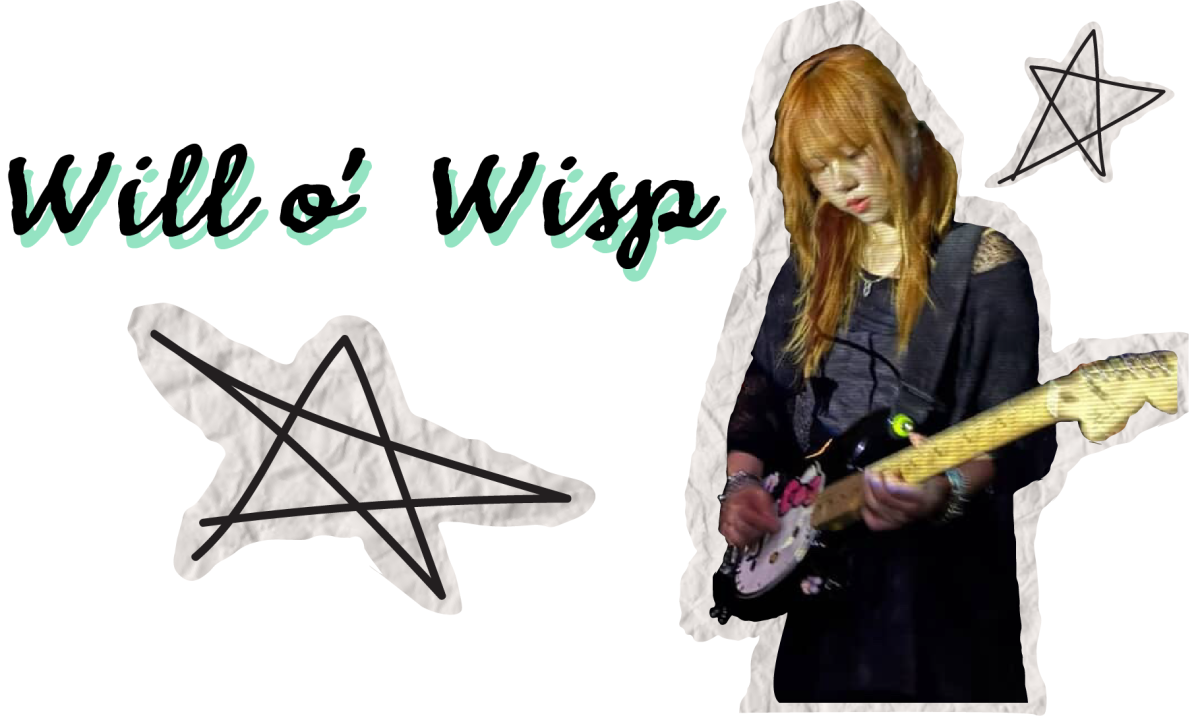
To 19-year-old Asian American Natalie Lu, it was the right decision to follow her heart’s pull, to leave college behind. It was the right choice to make music alone, unsure whether it would ever leave the walls it was created in. Before Wisp found herself at the center of the stage, emerging from pale mist to face a buzzing crowd, she had to go against the tides and fight to stay standing. Straying from the expectations that came with being an Asian American teenager, Lu instead experienced the pursuit of understanding what it meant to be young and longing in a world that rarely slows down.
Dropping out of college wasn’t an attempt at rebellion or collapse. It was a silent redirection. A traditional path that was no longer in alignment with her internal one, and music became the place where that disconnect could breathe without needing a solution. Wisp didn’t just appear with a statement or explicit manifesto. She arose subtly, carried by sound as opposed to any spectacle.
This subtlety matters. Early recordings felt like private thoughts in a diary, only they’re given a finish of distorted guitars, hushed vocals, integrated synths, heavy rhythms, and lyrics that drifted rather than asserted. Her emotion was not emphasized for effect, but instead, left softened, as though clarity itself felt dishonest. These songs weren’t immediately anxious, but you could still feel it. It lingered. The longing never climaxed. It circled.
It was only in 2023 that the interior world of Wisp would find its way out.
“Your Face” was released on April 4, 2023, and went viral on social media. Its impact was undeniable. The song had a careful pace, and the ambient guitars supported Lu’s voice, which stayed just above disappearance. It wasn’t overdramatic, but intimate, the wanting connection without knowing how to ask for it. The audience didn’t attach themselves because it was a catchy tune; they became attached because it felt like something familiar, something they already understood.
It was only a matter of time before conversations about the revival of shoegaze arose. Your Face felt like less of a throwback and more like an answer. Shoegaze, a genre long defined by distortion, suddenly sounded precise. In this time, filled with noise and a silent unease, this soft sound spoke to many, a truthfulness. Wisp wasn’t trying to revive; she was speaking in her own emotional language of the current day.
Later that year, Wisp released her debut EP, Pandora (2023). This project delves deeper into the feelings she conveyed in her earlier works. Instead of being told as a story in a book, the EP was delivered as more of a memory, an unresolved memory. Each track held a different variation of the same emotional thread: isolation and longing. The distortion created an ambience surrounding her voice, never overpowering her.
On Pandora, anxiety is expressed as a constant. The tracks aren’t about crisis; they’re about her perseverance. The songs don’t have impact because they’re intense, but because of the persistence you feel from them. The feeling of returning to the same thoughts night after night. There is a true loneliness, not from someone who is surrendering to being lost, but loneliness from someone who is still trying to figure out where she belongs.
Wisp refuses to exaggerate pain, a particularly distinguishing feature of her early work. She doesn’t submit her listener to bear her same suffering, but leaves the door open to embrace it. I find her emotional impact comes from her understated grace, where very little is forced. Her voice stays consistent even when the sound is at its loudest; she is unwavering. There is a connection created; she trusts you to feel the tension without being told what it means.
In her later works, we see a small shift, a sort of ease. More emotion surfaced as a result of a subtle step back from the distortion that had been very vibrant in her music before. As she releases more, that same distortion continues to define her unique sound, even as her emotional core begins to evolve. Her lyrics delve deeper into exploring external themes.
Themes of self-discovery came as an experience in her life rather than a conclusion, telling a story through subtle realizations that accumulated over time. She still deeply longed, but she wasn’t trapped. She still felt anxiety, but it no longer held her down. While Wisp’s earlier work felt ruminating, her newer work felt like it was learning to exist inside your head without suffocating.
This evolution reaches so many people because it feels like genuine growth. It’s quiet, not consistent, and doesn’t feel any different. Not until you look back and reflect. Wisp doesn’t reject negativity; she molds it. Less about positive engagement or hope, but towards deep engagement in the present. Understanding where you may be and finding yourself, rather than fixating on where you are not.
It is that mold where we see Natalie Lu’s own life impacted. Leaving college wasn’t the end of anything; it was the start of her understanding and paying closer attention. Her music became more popular and, in the process, shifted from isolation to recognition. Wisp’s community formed through a shared feeling, not through branding or narrative. Listeners found reflection in her music.
The shoegaze revival is usually discussed in terms of aesthetics and sound, but there is an emotional core in artists like Wisp. Her music isn’t about nostalgia; it uses its unique sound to hold on to the message she wants to convey. In a culture that loves clarity and visibility, this allows for ambiguity and not knowing.
Listening to Wisp’s discography feels like watching someone learning how to stay present, and why that is important for your own life. Her music doesn’t rush towards any resolution; it is the documentation of how far she has come. A slow shift from inward collapse to a deeper understanding of the outlook. Even in her most recent work, Yellow, tenderness remains, but it is not overwhelming; it is manageable.
The story of Wisp is ongoing and not about immediate success, but constantly moving through the darkness, not by escaping it, but by understanding it enough to keep going forward. There is something beautiful about that sort of honesty. It lingers and is a thought you always come back to. Maybe not because it is ending, but because it is true.