














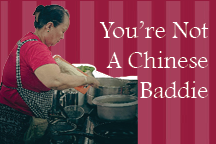









A TikTok and Instagram creator, @simplysashanoel, announced she is going to become a “Chinese baddie,” listing various Chinese lifestyle choices she planned to adopt—like eating traditional foods or drinking hot water. However, this poses a question: Is her 180-degree transformation truly the right decision to make?
In other words, there is a trend, known as the “Chinese Baddie” or “Chinamaxxing” life, circulating on social platforms, where people who aren’t of Chinese ancestry post themselves adopting new foods, clothes, or lifestyle choices from this culture, presenting it as a “curated lifestyle identity.” These influencers, thereby, reduce Chinese culture to a superficial commodity—whether it’s styling a modern qipao (pronounced chee-pow), drinking traditional tea, or experimenting with Traditional Chinese Medicine (TCM) remedies. As a Cantonese-American, my problem isn’t based on their lack of heritage but on the deeper issue of cultural erosion. It’s the act of unintentionally trivializing deep-rooted cultural practices as a consumable, superficial aesthetic or otherwise a “costume.” As a result, there is a gradual dilution of Chinese traditions. Even with good intentions, influencers like @simplysashanoel end up aestheticizing or romanticizing the culture, which reduces or unnecessarily beautifies the significance of unique traditions and food items into mere “Chinese baddie” essentials or as a mere “checklist” to complete. Mind you, in another post, the majority of the grocery items she bought were Japanese-inspired snacks or Korean drinks.
Therefore, when going out of your way to experience a different culture and tradition, your intention should never be simply to conform to an aesthetic trend for views and online engagement. Many people involved in this trend may not even see their own actions as shallow—and that is exactly the problem that needs to be addressed. To elaborate, in order for you to be shallow, it means doing something only to be part of a trend, and that is precisely what happens when a culture is performed for visibility rather than engaging in authentic cultural exploration. While I understand that the problem isn’t always a deliberate intent to disrespect the people of this culture, some of these creators are still uneducated about what content they are posting, meaning they also fail to guide their audience with enlightenment. Consequently, with a lack of understanding, cultural appropriation can act as a disguise for cultural appreciation seen by others, transforming a rich and intrinsic culture into just another aesthetic trend to be consumed. After collecting their views, it’ll be discarded, moving on with their non-Chinese lives when convenient within the next day.
One influencer, for example, might wear modernized traditional Chinese clothing as a disposable fashion prop, not knowing it implies that people behind it are not valued as humans but rather as useful objects to be worn. They may even wear a piece of red clothing because it supposedly represents Chinese culture, which only fuels harmful stereotypes about those who are Asian. More often than not, these same creators insert the 2009 viral Mandarin ballad, Jin Sheng Yuan (今生缘), which translates to “Affinities of This Life,” simply to align with a Chinese theme, without understanding its deeper meaning. They utilize singer-songwriter Chuan Zi’s song—rooted in themes of brotherhood and friendship—as some generic background noise because the lyrics are in Mandarin. Zi most likely wouldn’t want his song based on his experience in prison diminished to mere ‘content’ to prove a creator’s ethnicity.
Compared to them, true cultural appreciation means respectfully adopting traditions by genuinely taking the time to understand their historical context and culture rather than solely enjoying their food or fashion. Why? To put it in perspective, if someone were to eat at a Chinese restaurant, does that automatically mean they respect the culture or see the other people as equals? It wouldn’t because they could still believe what they think about this ethnic group, despite “embracing” their customs. It goes the same as saying, “I’m not racist because I have Asian friends” or “They want my culture, but not the people.”
On the other hand, a way to show cultural appreciation is going to a traditional, family-owned dim sum restaurant, a Cantonese cuisine believed to have originated in the Guangdong region of southern China. One of the most heartwarming things is when people of any background curiously ask how to eat fung zao out of respect (braised chicken feet, pronounced “foong-jow”), try out different sauces that pair best with har gow (shrimp dumpling, pronounced as “ha-gao”), or reach without hesitation for an unfamiliar dish with their chopsticks. Their mere effort is worth appreciating and acknowledging. They’re not attempting to prove a grand statement through a performance; they’re open-minded and willing to learn how to do something properly outside their own food culture. That is what cultural exchange should truly be like, and it should be set as a common example.
Consider, for a moment, the immigrant perspective as well. They are people who left their homeland for the United States, seeking better opportunities, escaping a war, or avoiding a dangerous humanitarian crisis. They inevitably adapt to the culture around them. Yet you never hear them claiming to suddenly be a different ethnicity, especially branding it as a “baddie.” They understand the difference between living alongside a culture and owning it as an identity.
So before you post, ask yourself what your content is actually doing for your audience. Will they perceive the Chinese lifestyle just as another silly trend to try? Never realizing that this kind of careless mimicry leaves a bitter taste for some Chinese-Americans, a community that has faced racial discrimination in this country for over 150 years? Or will they come to comprehend that this culture is something deeply dear to those who truly cherish it and live it every single day? Let’s hope it’s the latter.