



















What if you could live your life all over again? Every good and bad memory, all the heartbreak, the triumph, and the mistakes. Would you refuse, or would you say “yes” to it all? This question comes from the phrase “amor fati,” translated from Latin to “love of fate.” It is a philosophy that asks for nothing less than total acceptance of everything life throws at you, and more, it asks you to embrace it, even when it hurts.
In ancient Greece, Stoic philosophers came up with the idea of amor fati. Famous philosopher Epictetus, who spent the bulk of his years as a slave, believed that well-being was to embrace the idea of “whatever happens, happens.” Roman emperor Marcus Aurelius also believed in this idea and often wrote to himself as a reminder that one could not fight destiny, but only accept it. For German philosopher Friedrich Nietzsche, that wasn’t enough. He took this idea of “love of fate” to new extremes, inviting people to imagine an eternal recurrence of living your life again and again, for all eternity, down to every minor mistake or catastrophic one. His answer was clear: “greatness means wanting nothing to be different. Not yesterday, not tomorrow, not for eternity.”
This is what makes amor fati absurd. It doesn’t tell you to “deal with it.” Instead, it asks you to love the failure, to embrace the heartbreak, and to come to an agreement with the pain. And although it began as one man’s philosophy, its beautiful aspects live deeply within our culture: in music, in movies, in the lives of athletes and artists who couldn’t escape their fates, in our own lives, little parts of appreciation of the things you have despite not always getting what you want, amor fati lives in us.
Blessing the Hustle: MIKE
For New York Native rapper MIKE, amor fati lives in the grind itself. “Greedy” from the 2017 album “MAY GOD BLESS YOUR HUSTLE” hums with muffled samples and unpolished textures, embodying the roughness of living without pretending anything differently. On “amour,” he whispers his acceptance more directly, the very word love wrapped around the idea of fate, as if to insist that affection for life is found even in its bruises.
“Hunger” sharpens this: the ache for more, the emptiness that shapes him, becomes not something to reject but a truth to embrace. And in “October Baby,” his grief and youth collide; loss, depression, and survival bleed together into one sonic diary. MIKE doesn’t romanticize his hardship; instead, he refuses to erase it. Amor fati here is quiet and personal, but unyielding: it’s a blessing spoken over the hustle itself, over the struggle that forms the music and the man.
A Mirror of Anxiety: Navy Blue
Sage Elsesser, also known as Navy Blue, accepts his fate by not only owning his suffering but also owning the weight of its history itself. On “Memory Lane,” his verses drift through the fragility of recollection, turning nostalgia into testimony. “1491” confronts this history by facing the colonial trauma of his ancestors head-on, linking his own wounds to centuries of violence: an embrace of history not as a burden alone, but as an inheritance. In the song “Dreams of a Distant Journey,” he shifts the lens toward aspiration, yet even there, longing is folded into identity. In Sage’s music, amor fati becomes generational: to claim not just the present self, but the broken lineages that precede it. To love fate is to carry the weight of fate’s history; to refuse one’s history is to refuse amor fati itself. Here, Sage carves meaning from the scars left by those who wronged his ancestors long ago; he doesn’t accept the intentions of those wrongdoers, but he doesn’t deny their actions either.
King Krule: Admist the Wrath
Archy Marshall-stage name King Krule, has built his career around accepting heaviness. On his song “Slush Puppy,” he slurs vocals into clashing chords like streets that abruptly end. It’s fractured, restless, but very much alive, his sound of fate being accepted as chaos. Then “Easy Easy” sharpens the philosophy into a motto: “’Cause if you’re going through hell/you just keep going.” No triumph, no comfort, just persistence. It is amor fati without decoration, a simple vow to keep walking even when the streets seem endless.
Then there is “Out Getting Ribs,” the most popular and possibly most aching song in his discography. An imitation of a note legendary artist Jean-Michel Basquiat left on the door of his office when his dear friend Andy Warhol had died. “Out Getting Ribs” is a meditation on one’s awareness and longing for being alone; the title itself is a refusal to perform for the world, a personal gesture to survive through grieving. To love fate in this case is not to revel in tragedy but to celebrate it, to bear loss as one’s mould. In these tracks. Archy reminds us that despair, held close, can sparkle oddly; that being drowned is beautiful when you abandon the battle with the tide.
MAVI: The Discipline of Self
MAVI’s “Self Love” looks inward. While others would fracture under stress, he finds fortitude in owning oneself in its entirety, imperfections and all. To love fate is no abstruse concept to him—it is a day-to-day affirming of oneself in a world that would love to tear one apart. The song is a meditation because to accept life, first you must accept yourself.
Cinema of Fate: La Haine & The Seventh Seal
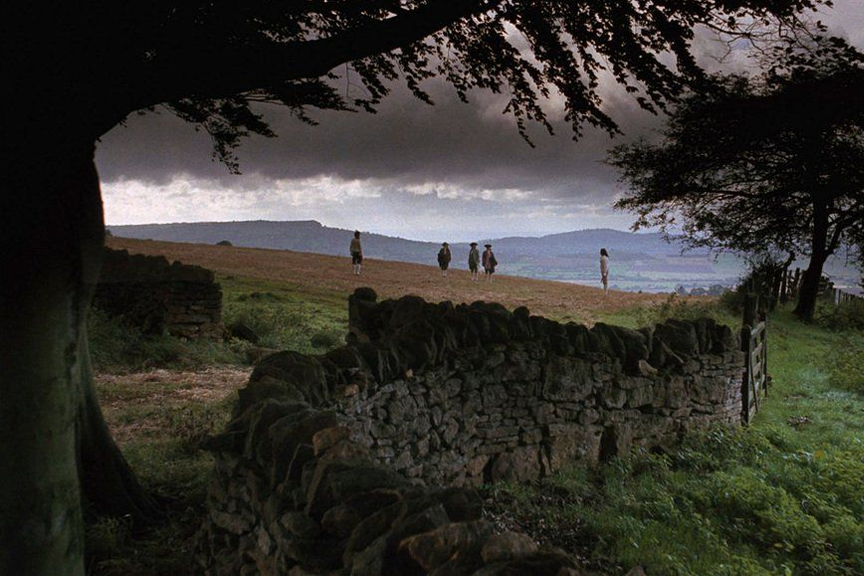
Films can render the same philosophical messages as we can listen to in music. In Mathieu Kassovitz’s 1995 film “La Haine,” the slogan, “jusqu’ici tout va bien” (so far, so good) echoes throughout the film as a man falls from a roof. It is a harsh message of falling out of life itself. Amor fati here is not euphoric but fatalistic: the feeling that it is pointless to resist your destiny, that the fall must be embraced.
On the other hand, Ingmar Bergman’s “The Seventh Seal” (1957) has death itself play Swedish knight Antonius Block in a game of chess. Block, returning home from the crusades to find his country in the grips of the Black Death. Tormented by the belief that God doesn’t exist, Block sets off on a journey. He continuously attempts to escape the awaiting game of his life, but all he can find is his approaching death. Over time, Block comes to accept his impending doom by finding appreciation in the little things; strawberry sharing and milk sipping with strangers, his life stretched out for an eternity. Block’s eventual submission to fate is understated but deep: the extent of his life is not in its duration, or its prosperity, but in those moments of naked existence.
Why Always Me? Mario Balotelli
On the pitch, Mario Balotelli turned philosophy into theatre. Misunderstood, criticized, suspended, and sanctioned—his career was going to crash in a whirlwind of chaos. But he moulded himself into the chaos. Having just scored for his club, Manchester City, after a season of ridicule, racist abuse, and criticism, he pulled up his shirt to reveal the words: Why Always Me? It wasn’t arrogance but a reaction, mocking the circus that followed him everywhere he went.
Balotelli’s amor fati was not silence or stoicism; it was swagger, defiance, and laughter. He accepted his fate as football’s enfant terrible and turned it into theater. Every fight, every headline, every moment of brilliance became part of his identity. He didn’t escape his chaos; he danced in it. That is the radical edge of amor fati: not merely surviving fate, but transforming it into performance, into legend.
Loving What Will Be
Amor fati compels us to love it all—sorrow and victory, emptiness and spectacle, isolation and multitude—as necessary. King Krule sees perverse beauty in desolation, MIKE sanctifies the grind itself, MAVI demands the discipline of self-acceptance, Navy Blue appropriates divine history as identity, movies like La Haine and The Seventh Seal reveal both the cruelty and elegance of fate, and Balotelli elevates chaos into art. To love one’s fate is not to avoid it, nor to wish it otherwise, but to accept it for the only life there is. It is to walk through perdition and press on, to weep and yet chant, to stagger and yet declare, so far, so good. It is to hold that even sorrow contains song, even endings contain beauty, and even chaos contains meaning.
