



















Lead
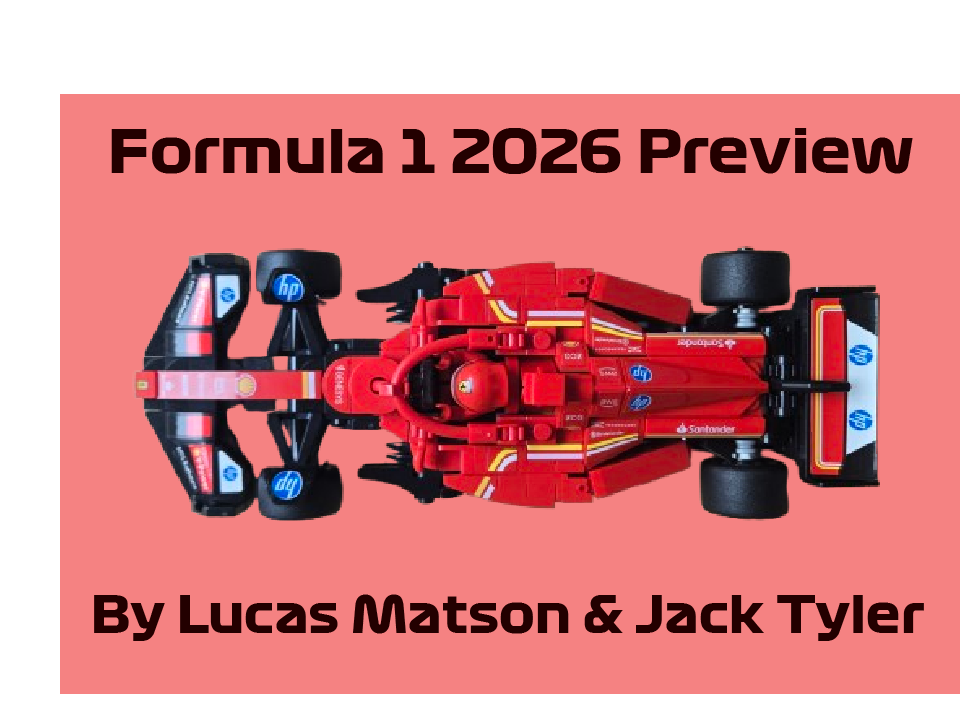
With the 2026 Formula 1 season arriving rapidly, there are some major changes that we can expect going into testing in early February. Throughout the past three months, teams have been working tirelessly to accommodate new rule changes, lighter designs, and new engines. Alongside the new rule changes, there come many new driver lineups as well as a new team entering the grid.
New Regulations
This year, both front and rear wings will be simpler, which roughly translates to fewer elements. The rear beam wings will be no more, while on the other end of the car, the front wing will feature narrower elements. The outer sections of the front wing will also offer potential new areas of development, as the front wing heavily influences the car’s overall aero performance.
The most significant change is the introduction of Active Aero. The cars can adjust the angle of both their front and rear wing elements depending on where they are on the track. In the corners, the flaps stay shut in their default position to maintain grip. On designated straights, drivers can activate low-drag mode, which opens the flaps and flattens the wings, which helps boost speed
By saying hello to the active aero, we are losing the drag reduction system in its current form because of a new overtake mode.
But what is overtake mode?
This mode is just for attack and is triggered when they’re within one second of the car in front. That gives them access to extra electrical energy, which they can use to deploy to overtake or pressure the driver ahead at a single detection point.
The Grid
McLaren is the title defender in both respects, coming off their second straight constructors’ championship and a driver’s championship for Lando Norris after a phenomenal 2025 season. McLaren aims to compete again in the first year of the new regulations, and will pair their dominant aerodynamics with a Mercedes engine that is projected to do well. However, McLaren’s downfall might come from team politics. Team executives Zak Brown and Andrea Stella have decided to run the team through the “papaya rules,” a standard in place to balance out their drivers, Norris and Oscar Piastri, to prevent race incidents and minimize strategic error. This contributed heavily to almost blowing a 104-point lead in the driver’s title race to Max Verstappen. Also, McLaren’s drivers are unproven under the limelight, with Norris struggling towards the end of 2024 and the start of 2025, and Piastri’s disastrous finish to the 2025 season.
Mercedes is a strong pick for one or both championships in 2026. They’re known for their strong power unit works, and often nail new regulations the quickest. This sets up top driver George Russell to compete for the title, with support from younger driver Andrea Kimi Antonelli. Russell is known as the Mr. Consistency of the grid and was able to score nine podiums and wins at Canada and Singapore in 2025. Antonelli showed great raw pace in his rookie season, with three podiums, but will need to improve on his consistency, as he scored only 15 points during the middle third of 2025.
2026 is a year of change for Red Bull as they enter the season with a new driver, a new director, a new team principal, and most of the engineers will leave at the end of the season. It will be the first time since 2021 that Max Verstappen enters without the #1. The biggest change is how Red Bull won’t be using Honda engines anymore. They’ve swapped to building their own engines with the backing of Ford. The car will still be built around Max Verstappen as the top driver, which means Isack Hadjar could struggle with the curse of the second seat. Last year, new team principal Laurent Mekies came in midseason and quickly built a great partnership with Verstappen. This led to Verstappen overcoming a 104-point deficit, only to just miss out on the title by two points in Abu Dhabi. Isack Hadjar was a rookie at VCARB in 2025 and performed admirably, even scoring a podium at Zandvoort. He looks to overcome the famous curse of the Red Bull second seat, where only one driver has made it multiple seasons since 2018.
Ferrari seeks to return to its winning ways under the new regulations, aiming to do this by utilizing Project 678, which is a compendium of changes to both the engine and suspension system. Their biggest change is the use of stainless steel cylinders. The goal of this change is to increase the efficiency of combustion in the engine and raise engine temperatures while also creating reliability. On the other hand, this adds extra weight to the engine, and teams have been using aluminium for this part since the 1960s. Ferrari has also reportedly developed a more efficient lightweight battery unit, which can offset the weight of the stainless steel and improve the car’s energy consumption. The third big change is to the rear suspension system, where Ferrari plans to install a pushrod suspension system. The goal of this change is to make technical management easier for the power unit and suspension system. It’ll be the first time since 2010 that an F1 car has used rear pushrod suspension. With all these changes, drivers Charles Leclerc and Lewis Hamilton hope to rebound from a disappointing 2025. Leclerc was hampered by the car last season, getting just one pole position and seven podiums with no wins, but the car didn’t plague him as much as Hamilton. Hamilton ended up with zero podiums for the first time in his storied career. The big question remains with the changes. Will they struggle again, or do they know something the other teams don’t?
Williams has been referred to as one of the more exciting teams coming into the new regulations set. In 2025, they moved between the midfield and top teams, scoring some podiums and high finishes after half a decade of irrelevance. They look to contend more this year with their Mercedes power units, and have two keys to success. Boss man James Vowles has dragged Williams back to prominence and needs to balance the development as in 2025, Williams had a much stronger first half than second, implying they struggled with this aspect. The second key is for their experienced yet underrated driver lineup of Alexander Albon and Carlos Sainz Jr to be firing on all cylinders.
The Visa Cashapp Racing Bulls, commonly referred to as VCARB, serve as Red Bull’s junior team, and it’s always exciting to see how they’ll fare. They tend to turn out like a midfield version of Red Bull, with younger drivers and middling performance. This year, they’ll be led by the sophomore driver Liam Lawson. The scrappy, feisty New Zealander will come into this year eager to prove himself after being demoted by the big team in 2025. He is predicted to beat his teammate, Arvid Lindblad. Lindblad was an interesting choice for the seat after an inconsistent showing in F2, but beat out veteran Yuki Tsunoda for the opportunity.
This year, Aston Martin is switching from Mercedes engines to Honda to get full backing. This will help them in the financial department, and they’ll have more say with the power unit. Their new team principal is the famous designer Adrian Newey, who had incredible success working with Honda while at Red Bull. Aston’s top driver is the oldest driver on the grid, the man with the most races in F1 history, Fernando Alonso. Alonso is a two-time world champion, winning the title in 2005 and 2006. He has struggled to get back, with no wins since 2013. Will this year be the pinnacle of El Plan? In recent years, the Honda power unit has disappointed Red Bull, and Aston have developed a reputation for doing the same. Their second driver, Lance Stroll, is known for struggling to stay on the island, but he’s scored points and is best in wet conditions. If both drivers are at their peak, Aston has as good a chance as anyone.
If there is any midfield team with promise for 2026, it’s Haas. The lineup of Esteban Ocon and Oliver Bearman put together many inspiring performances in 2025, such as Ocon’s P5 in China and Bearman’s brilliant Mexico drive to P4. The American outfit has been known for punching above its weight, and it’ll be needed in 2026, as one of the narratives of the offseason has been about Cadillac’s ambition to supplant Haas as America’s Team. In order to prove themselves, Haas will have to work on their consistency, which they have struggled with since joining the grid a decade ago.
At the end of the 2025 season, Alpine sat last in the table. They were the only team to have a driver go scoreless, and the team dropped a total of 3 points during the second half of the season. For perspective, Max Verstappen scored 234 in that time by himself. Alpine’s season started to go south when the team cut Jack Doohan after six races with zero points. They replaced him with Franco Colapinto, who then went the other eighteen races with zero points. Both were far off the team’s excellent number one driver, Pierre Gasly, and he’ll return with Colapinto for 2026.
New Teams: Cadillac and Audi
With the 2026 season coming right around the corner, there will be two huge changes to the teams on the grid. First is the full takeover that Audi is performing on Kick Sauber. The German manufacturer is fully taking over the Sauber operation, transforming it into their official factory team, which brings a strong manufacturer presence to the grid. The biggest news of the season so far is the new team joining the grid. An entirely new US-based team, Cadillac (General Motors). They’re entering as the eleventh constructor, partnering with Ferrari for power units initially, with plans for their own engine development. Cadillac has been in the works for a couple of years now, and finally, we can see what the American-based team can do.
Overall, the 2026 season is shaping up to be a very new and exciting time in Formula 1 history. Many new and exciting teams and drivers have joined the grid, as well as some huge rule changes that will completely change the sport as we know it.